
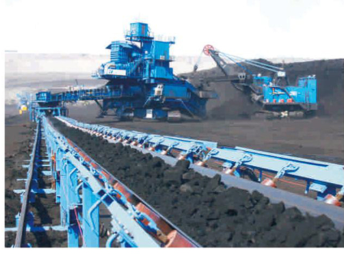
Polyester conveyor belts are widely used for medium and long-distance material conveying with higher load requirements. They offer good wear resistance, high strength and stable performance in bulk material handling systems.
Available Models:EP80 / EP100 / EP125 / EP150 / EP200 / EP250 / EP300 / EP400
Polyester Conveyor Belt Technical Specifications
Polyester conveyor belt specifications are selected according to belt width, EP fabric strength, number of plies, rubber cover thickness, material type, conveyor length, belt speed, load capacity and working conditions.
| Width mm | Layers | Working Face Cover Thickness mm | Non-working Face Cover Thickness mm |
| 400 | 3-4 | 4.5 / 3.0 | 3.0 / 1.5 |
| 500 | 3-6 | 4.5 / 3.0 | 3.0 / 1.5 |
| 600 | 3-5 | 6.0 / 4.5 | 3.0 / 1.5 |
| 650 | 3-5 | 6.0 / 4.5 / 3.0 | 3.0 / 1.5 |
| 800 | 3-6 | 6.0 / 4.5 / 3.0 | 4.5 / 3.0 / 1.5 |
| 1000 | 3-7 | 6.0 / 4.5 / 3.0 | 4.5 / 3.0 / 1.5 |
| 1200 | 4-7 | 6.0 / 4.5 | 4.5 / 3.0 / 1.5 |
| 1400 | 4-7 | 6.0 / 4.5 | 4.5 / 3.0 |
| 1600 | 4-7 | 6.0 / 4.5 | 4.5 / 3.0 |
| 1800 | 4-7 | 6.0 / 4.5 | 4.5 / 3.0 |
| 2000 | 5-7 | 6.0 / 4.5 | 4.5 / 3.0 |
Note: Belt width, number of fabric layers and rubber cover thickness should be selected according to material type, conveying distance, load capacity, belt speed and working conditions. Please contact us for project-based selection.
Polyester Conveyor Belt Buyer Questions
These answers help buyers confirm whether a polyester conveyor belt is suitable for stable, medium-distance or long-distance bulk material conveying before sending an RFQ.
What is this belt used for?
This EP rubber belt is used for bulk material handling in mining, cement plants, quarrying, ports, power plants, metallurgy and other industrial conveyor systems.
How is it different from a nylon belt?
An EP belt uses polyester fabric in the warp direction and nylon fabric in the weft direction. It offers good dimensional stability, low elongation, high tensile strength and reliable troughability. Nylon belts also provide high strength and flexibility, but EP belts are often selected when buyers need lower stretch and more stable running performance.
When should buyers choose this type of belt?
Buyers should choose this type of belt when the conveyor system requires stable operation, medium or long conveying distance, higher load capacity, good impact resistance and low elongation during use.
What information is needed for quotation?
Please provide belt width, belt length, EP fabric strength, number of plies, top cover thickness, bottom cover thickness, material handled, conveyor length, belt speed, load capacity, working temperature, quantity and destination port.
Can the width and EP ply be customized?
Yes. Belt width, belt length, EP fabric strength, number of plies, rubber cover thickness and rubber cover grade can be customized according to material type, conveying distance, load capacity and working conditions.